HOKE 0112L2P2 Electro Mechanical Valve Actuator
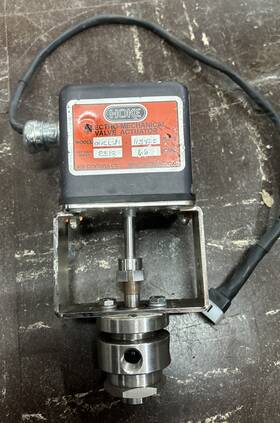
( Brand: Hoke ), ( Manufacturer Part Number: 0112L2P2 ), ( Part Type: Valve Actuator ), ( Valve Operation: Motorized )
Review HOKE 0112l2p Electro Mechanical Valve Actuator
The **Hoke 0112L2P2** and **0112L2P** electro-mechanical valve actuators are precision-engineered, high-performance actuators designed to provide reliable and efficient control for a wide range of industrial, commercial, and specialty applications. These compact yet robust actuators are part of Hoke s trusted line of pneumatic and electro-mechanical solutions, renowned for their durability, repeatability, and seamless integration with valve systems. The **0112L2P2** and **0112L2P** models feature a **direct-acting, spring-return design**, ensuring consistent and predictable operation while minimizing wear and tear over extended use. Constructed from high-quality materials, including corrosion-resistant alloys and reinforced housing, these actuators are built to withstand harsh environments, including exposure to moisture, chemicals, and temperature fluctuations, making them ideal for applications in water treatment, HVAC systems, chemical processing, and automation industries.
At the core of these actuators is a **high-efficiency solenoid mechanism**, which delivers rapid and precise actuation with minimal power consumption. The **L2P series** incorporates a **low-profile, modular design**, allowing for easy installation and compatibility with a variety of valve types, including ball valves, butterfly valves, and plug valves. The **0112L2P2** variant includes an **integrated position feedback system**, enabling real-time monitoring of valve position through a built-in limit switch or optional electronic feedback module, enhancing system control and diagnostics. This feature is particularly advantageous in automated processes where precise positioning and fault detection are critical. The **0112L2P**, while similarly robust, offers a slightly more compact form factor, making it suitable for applications with space constraints without compromising performance.
Both models are engineered for **long-term reliability**, featuring sealed internal components to prevent contamination and ensure smooth operation even in demanding conditions. The actuators operate on standard **120V AC or 24V DC power**, offering flexibility for integration into existing electrical systems. Their **fail-safe design** ensures that in the event of a power loss or solenoid failure, the actuator defaults to a predefined position either fully open or fully closed depending on the spring configuration, thereby maintaining system integrity. Additionally, the **0112L2P2** includes a **locking mechanism** to prevent unintended movement, which is particularly useful in applications requiring secure valve positioning.
Hoke s **0112L2P2** and **0112L2P** actuators are backed by rigorous testing and certification, including compliance with industry standards such as **UL, CSA, and ATEX** for hazardous environments, ensuring they meet the highest safety and performance benchmarks. Their modular construction allows for easy maintenance, with replaceable components such as seals, springs, and solenoids, reducing downtime and extending the actuator s operational lifespan. Whether deployed in a critical infrastructure system, a laboratory setting, or an industrial automation process, these actuators deliver **consistent, dependable performance**, making them a versatile and cost-effective solution for precise valve control.
### **Pros and Cons of buying a Hoke 0112L2P2 (Electro-Mechanical Valve Actuator)**
#### **Pros:**1. **High Reliability and Durability** The Hoke 0112L2P2 is designed for industrial applications, offering robust construction with materials resistant to corrosion, wear, and environmental factors. Its electro-mechanical design ensures consistent performance over extended use.
2. **Precision Control** The actuator provides accurate positioning and repeatability, making it suitable for applications requiring tight control over valve operation, such as in process control systems, chemical plants, or water treatment facilities.
3. **Energy Efficiency** As an electro-mechanical actuator, it typically consumes less power compared to pneumatic or hydraulic alternatives, reducing operational costs over time.
4. **Low Maintenance Requirements** Unlike hydraulic actuators, which rely on fluid systems prone to leaks and contamination, this unit has fewer moving parts exposed to external elements, leading to lower maintenance needs.
5. **Compatibility with Automation Systems** The actuator integrates seamlessly with PLCs (Programmable Logic Controllers) and other automation systems, allowing for remote control, monitoring, and programming via digital interfaces.
6. **Wide Operating Range** It can handle a broad range of temperatures, pressures, and environmental conditions, making it versatile for various industrial settings, including harsh or corrosive environments.
7. **Quiet Operation** Electro-mechanical actuators generally produce less noise compared to pneumatic systems, which can be advantageous in noise-sensitive applications.
8. **Long Lifespan** With proper installation and maintenance, the actuator is built to last for many years, reducing the need for frequent replacements.
9. **Safety Features** Many models include built-in safety mechanisms such as limit switches, overload protection, and fail-safe modes to prevent accidents or equipment damage.
10. **Cost-Effective for Long-Term Use** While the initial purchase price may be higher than some alternatives, its durability and efficiency often result in lower total cost of ownership over time.
---
#### **Cons:**1. **Higher Initial Cost** Compared to simpler manual or pneumatic actuators, the Hoke 0112L2P2 has a higher upfront cost, which may be a barrier for smaller businesses or projects with tight budgets.
2. **Complex Installation** Electro-mechanical actuators require precise installation, including proper wiring, calibration, and integration with control systems. This may necessitate specialized labor, increasing installation costs.
3. **Dependence on Electrical Power** Unlike pneumatic actuators, which can operate using compressed air, this unit requires a stable electrical supply. Power outages or voltage fluctuations could disrupt operation.
4. **Potential for Electrical Failures** Electrical components are susceptible to issues such as wiring faults, motor burnout, or sensor malfunctions, which could lead to downtime if not addressed promptly.
5. **Limited Offline Operation** Without a backup power source (e.g., battery or generator), the actuator cannot function during power failures, potentially causing process interruptions.
6. **Sensitivity to Environmental Conditions** While durable, extreme temperatures, humidity, or exposure to corrosive substances can still affect performance if not properly sealed or maintained.
7. **Training Requirements** Operators and maintenance personnel may need training to properly use, troubleshoot, and maintain the actuator, adding to operational costs.
8. **Potential for Latency in Control Systems** In highly dynamic processes, the actuator s response time may introduce slight delays compared to pneumatic or hydraulic systems, which can be critical in some applications.
9. **Limited Availability of Spare Parts** Depending on the manufacturer and region, sourcing replacement parts or finding technicians familiar with this specific model may be challenging.
10. **Overkill for Simple Applications** For basic on/off control in non-critical systems, a simpler or cheaper actuator might suffice, making this unit unnecessary for low-complexity setups.
---
### **Conclusion:**The Hoke 0112L2P2 electro-mechanical valve actuator is a high-quality, reliable choice for industrial applications requiring precise, automated valve control. Its durability, efficiency, and integration capabilities make it ideal for process control, chemical, and water treatment industries where reliability and accuracy are paramount. However, its higher cost, electrical dependency, and complexity in installation and maintenance may not justify its use in simpler or budget-constrained applications.
For users in industries such as oil and gas, pharmaceuticals, or manufacturing where uptime and precision are critical, the benefits outweigh the drawbacks. Conversely, businesses with limited budgets or simpler valve control needs may find more cost-effective alternatives.
---
### **Recommendation:** - **Buy the Hoke 0112L2P2 if:**- You require a durable, precise, and automated valve actuator for a critical industrial process.
- Your application demands integration with automation systems (PLCs, SCADA) and long-term reliability.
- You can justify the higher initial cost with long-term operational and maintenance savings.
- Your environment is stable enough to support electrical operation without frequent power issues.
- **Consider Alternatives if:**- Your budget is limited, and a simpler or lower-cost actuator (e.g., pneumatic or manual) would suffice.
- Your application does not require high precision or automation (e.g., occasional manual override is acceptable).
- Power reliability is a concern, and backup power sources are not feasible.
- You lack the technical expertise or resources for proper installation and maintenance.
For most industrial applications where reliability and automation are key, the Hoke 0112L2P2 is a strong recommendation. However, always conduct a thorough cost-benefit analysis and consult with a specialist to ensure it aligns with your specific requirements.
Details:
With its electro-mechanical operation, it offers precision and accuracy in valve positioning, making a valuable component for various industrial applications requiring precise control of fluid flow. The Hoke 0112L2P Electro-Mechanical Valve Actuator is a motorized valve operation product manufactured by HOKE.
part #: 0112l2p2 prices
- $39.00-$65.00
specifications valvesplumbing:
- brand: Hoke
- mpn: 0112l2p2
- part type: Valve Actuator
- valve operation: Motorized
payments valvesplumbing:
- wallet: Apple-pay
- other
- credit card: Discover
general valvesplumbing:
- Hydraulics, Pneumatics, Pumps Plumbing > Valves Manifolds > Other Valves Manifolds
- condition: Used
offer valvesplumbing:
- quantity: 1
- started: March 13, 2026
- options: Ship-to-home
- availability: In Stock
- sold: 0
returns valvesplumbing:
- policy: Returns Accepted
- paid by: Seller
- time: 30 Days
- method: Money back
seller valvesplumbing:
- city: Grand Prairie, Texas
- # reviews: 1996 9
- rating: 99.9%
shipping valvesplumbing:
- type: Calculated
- service: USPS Ground Advantage
- class: Standard
- transit: 4-8 Days
- cost: $0.00
- carrier: USPS
Hoke 0112L2P2 Is Similar To:
- 10184-4 Hoke New Globe Valve (33.3% similar) Better deals on shipping if you win or order more than 1 item...(May 19th, 2018)
- 2118f8y Hoke Needle Valve 316 (32.9% similar) Hoke needle valve 316 SST 3/4 model: 2118F8Y 6000 psi...(September 22nd, 2017)
- 3812g8y Hoke Od Tube Ss Needle Valve Psig (33% similar) New - no box 1/2 OD tube SS needle valve pig Hoke 3812G8Y B-25...(May 12th, 2018)
- 3812h46y Hoke Od Tube Mnpt Ss Needle Valve Psi (35.3% similar) New - no box 3/8 OD tube x 1/4 Mont SS needle valve psi Hoke 3812H46Y C-13...(June 15th, 2018)
- 7065g6y Hoke Tube Way Valve Psig Ultramight (34.3% similar) Good condition. New surplus. No packaging. No caps or ferrules 3/8 tube way valve 500 pig 316SS Hoke ultralight 7065G6Y C-5...(March 25th, 2018)
- Ss-31rf2 Swagelok Brand New Whitey Npt Metering Valve Ss Parker Hoke (29% similar) Brand new snakelike stainless steel metering valve high precision 1/8 not female inlet outlet model: SS-31RF2 you are buying one...(May 29th, 2018)
- Hoke Dr291a Pile New Unused 3 8 In Brass Stainless Steel Air Gas Liquid Valve (31.6% similar) These have 3/8 inch ports. Add a bunch of items to your cart, then hit the request total link at top list items, and commit paying, but do not actually pay. Hoke valves, here is a big pile of new unused valves, type DR291A. Be mindful of trying to combine heavy and delicate things in one order. ...(August 12th, 2024)
- Hoke 0112l2f Valve Actuator T237999 (57.1% similar) Hoke 0112L2F valve actuator T237999 warranty information: this is a used item, in good condition and includes 30 day warranty...(August 22nd, 2024)
- Hoke D309 Needle Valve (38.5% similar) With its sturdy make and the brands commitment to excellence, this valve is an ideal addition any hydraulics, pneumatic, pumps, or plumbing system. Its compact size and easy-to-use design make it suitable for a wide range of applications, from laboratory experiments to industrial machinery...(September 3rd, 2024)
- Hoke Dr306m Needle Valve Used (37.6% similar) With a maximum pressure of 3000 psi, it can handle heavy-duty operations with ease. This Hoke DR306M needle valve is a reliable addition to any industrial setup. Purchase this used Hoke DR306M needle valve today and take your industrial setup to the next level. The brand name Hoke is synonymous with...(September 3rd, 2024)
- Hoke 4551q4m Monel Valve Bellows Sealed 1 4 Copper Tube In-out (32.2% similar) For sell is a Hoke money valve, bellows sealed, 1/4 copper tube in-out. Model 4551Q4M. This item is used, with a 30 day warranty...(September 7th, 2024)
