VICKERS 02-127342 Lever Hydraulic Valve 2N 60
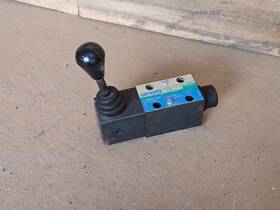
( Brand: Vickers ), ( Manufacturer Part Number: 02-127342 ), ( Model: DG17V3 2N 60 ), ( Part Type: Lever Hydraulic Valve ), ( Non-domestic Product: No ), ( Country Of Origin: United States )
Review VICKERS New Replacement Lever operated Hydraulic Valve 2n 60
The **Vickers 02-127342 Lever-Operated DG17V Hydraulic Valve (2N, 60)** is a precision-engineered component designed for high-performance hydraulic systems, offering unmatched reliability and efficiency in fluid control applications. Part of Vickers renowned DG17V series, this valve is specifically tailored for use in demanding environments where precise flow regulation, rapid response, and robust durability are critical. The **2N (2-way, normally closed)** configuration ensures that the valve maintains a sealed state until actively engaged, minimizing leakage and energy loss while providing seamless operation when actuated. With a **60** designation, it likely corresponds to a specific flow rating or pressure rating (commonly 60 gallons per minute or a comparable metric), making it suitable for medium to high-capacity hydraulic circuits where consistent performance is essential.
Constructed from high-grade materials, this lever-operated valve features a robust **hydraulic spool mechanism** that ensures smooth, repeatable movement with minimal wear, even under fluctuating loads. The **lever-actuated design** allows for manual or mechanical operation, providing versatility in systems where human intervention or auxiliary controls are required. The valve s internal components, including the **pilot ports, check valves, and sealing elements**, are engineered to withstand repeated cycling without degradation, ensuring long-term operational integrity. Its compact yet sturdy construction makes it ideal for integration into tight spaces within hydraulic power units, mobile equipment, or industrial machinery where space efficiency is a priority.
The **DG17V series** is renowned for its **fail-safe operation**, meaning that in the event of a system failure or loss of pressure, the valve defaults to a safe state either fully open or fully closed preventing unintended fluid flow and potential damage. This feature is particularly valuable in safety-critical applications such as construction machinery, agricultural equipment, or material handling systems where operational stability is non-negotiable. Additionally, the valve s **low-friction design** reduces energy consumption by minimizing resistance to fluid flow, contributing to overall system efficiency.
For maintenance and serviceability, the Vickers 02-127342 is designed with accessibility in mind, allowing for easy disassembly and inspection of internal components without compromising the valve s structural integrity. The **sealing materials** likely engineered polymers or elastomers are resistant to hydraulic fluids, contaminants, and temperature variations, ensuring prolonged service life even in harsh operating conditions. Whether deployed in a stationary hydraulic press, a mobile excavator, or an automated manufacturing line, this valve delivers consistent performance, making it a trusted choice for engineers and technicians seeking dependable hydraulic control solutions.
### **Analysis of buying a Vickers Lever-Operated DG17V Hydraulic Valve (Part No. 02-127342, 2N/60)**
#### **Pros:**1. **Brand Reputation** Vickers is a well-established manufacturer in hydraulic components, known for reliability, precision engineering, and compatibility with industrial systems. Their products are widely trusted in heavy machinery, aerospace, and automation.
2. **Lever-Operated Design** This type of valve is manually controlled, making it ideal for applications where direct operator intervention is required (e.g., emergency shutdowns, manual override systems, or maintenance scenarios). It eliminates the need for external actuators or complex automation.
3. **Compatibility** The DG17V series is designed for medium-pressure hydraulic systems, typically operating within standard industrial ranges (e.g., 200 300 bar). The **2N/60** designation suggests a nominal flow rate of 2N (likely 20 liters/min) and a port size of 60 (possibly 6/8 mm or equivalent, depending on the system). This makes it suitable for moderate-flow applications like mobile equipment, presses, or hydraulic cylinders in manufacturing.
4. **Durability** Vickers valves are built for rugged environments. The lever-operated mechanism is often reinforced for longevity, reducing wear from frequent manual adjustments. The internal components (spools, seals) are typically made from high-grade materials like steel or bronze, resistant to corrosion and abrasion.
5. **Maintenance Accessibility** Lever-operated valves are generally easier to service than solenoid- or pilot-operated counterparts. Users can manually test functionality without relying on electrical systems, which is advantageous in remote or hazardous locations.
6. **Cost-Effective for Manual Systems** If your application does not require automation (e.g., no need for remote control or sequencing), a lever-operated valve can be a cost-effective alternative to more complex, electrically actuated solutions.
7. **Backward Compatibility** Vickers has a long history of producing standardized components, so replacement parts, manuals, and technical support are widely available. This reduces the risk of obsolescence compared to proprietary or niche brands.
---
#### **Cons:**1. **Manual Operation Limitations** The lever mechanism requires physical intervention, which can be impractical in automated or high-speed processes. This may introduce delays or human error in continuous operations.
2. **No Remote Control** Unlike solenoid or pilot-operated valves, this model cannot be integrated into automated control systems (PLCs, hydraulic circuits with sensors, or remote start/stop mechanisms). If your system requires remote operation, you ll need additional actuators or interfaces.
3. **Potential for Operator Fatigue** In applications requiring frequent manual adjustments (e.g., repetitive cycling), operators may experience fatigue, leading to reduced efficiency or safety risks.
4. **Limited Flow Control Precision** Lever-operated valves typically offer on/off or basic throttling control rather than precise flow regulation. If your application demands exact pressure or flow modulation, a proportional or servo valve may be necessary.
5. **Space Constraints** The lever mechanism may require additional clearance around the valve, which could be a limitation in compact hydraulic systems or retrofitting existing equipment.
6. **Wear Over Time** While durable, the lever and internal components (e.g., seals, springs) are subject to wear from repeated use. Regular maintenance is required to prevent leaks or reduced responsiveness.
7. **Higher Initial Cost for Simple Tasks** If your application could use a simpler valve (e.g., a basic check valve or a spring-return valve), the DG17V may be overkill, increasing upfront costs without added functionality.
8. **Training Requirements** Operators must be trained to use the lever correctly to avoid misalignment or damage to the valve or connected components.
---
### **Ending Conclusion:**The **Vickers DG17V (02-127342, 2N/60)** is a robust, manually operated hydraulic valve suited for applications where direct human control is necessary, such as emergency stops, manual overrides, or systems lacking automation. Its strengths lie in reliability, ease of maintenance, and compatibility with standard hydraulic setups. However, it is not ideal for automated or high-precision applications, where solenoid or pilot-operated valves would be more appropriate.
The decision to purchase this valve depends on your specific requirements:- **Buy it if:** You need a manual override, operate in a non-automated environment, or prioritize durability and brand trust.
- **Avoid it if:** Your system requires remote control, precise flow regulation, or high-speed operation.
---
### **Recommendation:**1. **Verify Compatibility** Confirm that the valve s pressure, flow rate (2N/60), and port sizes match your hydraulic system s specifications. Consult the manufacturer s manual or a hydraulic engineer if unsure.
2. **Assess Automation Needs** If your system could benefit from remote operation, consider pairing this valve with an actuator or solenoid kit (e.g., Vickers part numbers for conversion). Alternatively, evaluate if a simpler or more automated valve (e.g., a Vickers DG series with pilot control) would better fit your needs.
3. **Budget for Maintenance** Allocate resources for periodic inspections of seals, lever mechanisms, and internal components to extend the valve s lifespan.
4. **Source from Authorized Dealers** Purchase from a Vickers-approved distributor or the official website to ensure authenticity and access to warranties or technical support.
5. **Consider Alternatives** If manual operation is a bottleneck, explore:- **Pilot-Operated Valves** (e.g., Vickers DG series with pilot control) for semi-automated systems.
- **Solenoid-Operated Valves** for full remote control.
- **Proportional Valves** if precise flow/pressure regulation is critical.
6. **Long-Term Cost Analysis** Weigh the initial cost against operational efficiency. While lever-operated valves may save on automation costs, they could increase labor costs if manual intervention is frequent.
**Final Verdict:** The DG17V is a sound choice for manual or semi-automated hydraulic applications where Vickers reliability is a priority. However, if your system demands automation or higher precision, investing in a more advanced valve may yield better long-term performance. Always test the valve in your specific setup before full integration to ensure compatibility.
Details:
Nice Valve doesn't look to have been used.
part #: 02127342 prices
- $180.00-$430.00
specifications valvesplumbing:
- brand: Vickers
- mpn: 02-127342
- model: Dg17v3 2n 60
- part type: Lever Hydraulic Valve
- non-domestic product: No
- country of origin: United States
seller valvesplumbing:
- city: East Canton, Ohio
- rating: 99.9%
- # reviews: 2322
returns valvesplumbing:
- policy: No Returns
general valvesplumbing:
- Hydraulics, Pneumatics, Pumps Plumbing > Valves Manifolds > Other Valves Manifolds
- condition: Used
shipping valvesplumbing:
- transit: 5-12 Days
- cost: $15.00
- service: USPS Ground Advantage
- type: Fixed
- carrier: USPS
- class: Standard
offer valvesplumbing:
- best offers: True
- started: June 4, 2026
- quantity: 1
- options: Ship-to-home
- sold: 0
- availability: In Stock
payments valvesplumbing:
- credit card: Discover
- other
- wallet: Google-pay
Vickers 02-127342 Is Similar To:
- 02-110416 Vickers Direct Operated Single Solenoid Valve New (45.3% similar) Specs: D03 direct operated single solenoid valve 110 120V Hz 2 position, spring offset terminal box gal min w indicator lights position: all ports blocked crossover: 5000 psi condition: new new-not original packaging includes items described above and exactly whats pictured. This item packed and ...(September 30th, 2018)
- 02-126215-dghs4lw-012b-b-60 Vickers Directional Valve Used Take Out (37.2% similar) Location Vickers hydraulic valve DGHS4LW-012B-B-60 made in USA weighs...(August 27th, 2018)
- 02-144984 Eaton Vickers Hydraulic Valve (49.6% similar) 2, height in. 34 holding amps, GM psi 10, max. Hydraulic directional valve, solenoid operated, CETOP-03 size, number of ways 4, tandem spool type, coil volts 110-120VAC, 50 60 Hz. Pressure psi 5075, max. 6, DG4, ISO standards. 6, width in. Tank pressure psi 3045, fluorocarbon seal type, ...(September 28th, 2017)
- 02-149390 Pa5dg4s4lw-012a-h-60-s525 Vickers Pilot Valve (33.1% similar) ...(February 7th, 2019)
- 02-178268 Eaton Victors Vickers Rev Screw In Cartridge Valve New (36.6% similar) ...(February 13th, 2019)
- 02-337014 Vickers Eaton Hydraulic Directional Control Valve (46.7% similar) ...(September 11th, 2018)
- 046-618-s8 Vickers Check Valve 046-816-s8 (35.3% similar) ...(June 22nd, 2017)
- 17h02g1da1 Vickers Valve Used (33.6% similar) If another carrier such as ups or FedEx is required to ship due the size, then shipping costs may change...(March 18th, 2018)
- 20057a Vickers One New Valve (35.8% similar) One new Vickers valve 2005 7A...(February 13th, 2018)
- 307aa00037a Vickers Eaton Cartridge Relief Valve (34.9% similar) New cartridge valve Vickers ships quickly...(April 15th, 2018)
- 31088-1 Vickers Cartridge Valve Body Sae Way (39.3% similar) New SAE12 ports Vickers valve body ships quickly...(April 15th, 2018)
