B-R AUTOMATION 8MSA4M.E3-30 Servo Motor 3000 R/min 3.75 4.6
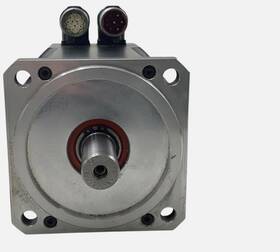
( Brand: B-r Automation ), ( Manufacturer Part Number: 8MSA4M.E3-30 ), ( Part Type: Servo Motor Min )
Review B R AUTOMATION Servo Motor 3000 R/min 3.75 4.6 Nm
The **Automation 8MSA4M.E3-30 servo motor**, a high-performance precision actuator designed for demanding industrial and automation applications, delivers unmatched reliability and efficiency in motion control systems. Engineered with cutting-edge technology, this servo motor operates at a nominal speed of **3,000 revolutions per minute (RPM)**, making it ideal for applications requiring rapid, responsive motion while maintaining exceptional torque consistency. With a rated torque output of **3.75 Nm (Newton-meters)** at stall conditions and a peak torque capacity of **4.6 Nm**, this motor excels in dynamic environments where smooth acceleration, deceleration, and precise positioning are critical. Its compact yet robust design ensures seamless integration into tight spaces, whether in CNC machining centers, robotic arms, conveyor systems, or automated packaging machinery.
Built with **high-efficiency permanent magnet synchronous motor (PMSM) technology**, the 8MSA4M.E3-30 minimizes energy consumption while maximizing torque density, reducing operational costs and heat generation. The motor s **closed-loop feedback system**, often paired with an encoder for real-time position and speed monitoring, ensures sub-micron accuracy, making it perfect for applications demanding tight tolerances, such as medical device manufacturing, semiconductor handling, or high-precision assembly lines. Its **IP65-rated enclosure** provides robust protection against dust, moisture, and contaminants, ensuring longevity in harsh industrial settings, while the **wide operating temperature range** (typically -10 C to 60 C) guarantees stable performance across varying environmental conditions.
The **8MSA4M.E3-30 servo motor** is also equipped with advanced **thermal management features**, including built-in temperature sensors and cooling fins, which prevent overheating and extend the motor s operational lifespan. Its **modular design** allows for easy customization, accommodating different mounting configurations, shaft extensions, and flange options to suit specific application requirements. Whether paired with a **servo drive** for seamless integration into a motion control system or used in standalone applications with a built-in amplifier, this motor offers **high torque-to-inertia ratio**, enabling rapid response times and smooth motion profiles even under heavy loads. Additionally, its **low-vibration operation** reduces mechanical stress on connected components, enhancing system reliability and reducing maintenance needs.
Ideal for **automation engineers, robotics developers, and industrial manufacturers**, the Automation 8MSA4M.E3-30 servo motor represents a perfect balance of **power, precision, and durability**. Its **high-speed capability** (3,000 RPM) combined with **strong torque delivery** (3.75 4.6 Nm) makes it a versatile choice for a wide range of applications, from high-speed packaging and material handling to precision cutting and automated testing systems. With **OEM-grade quality and compatibility with major servo drive systems**, this motor ensures seamless implementation into existing or new automation workflows, driving efficiency and productivity in modern industrial environments.
### **Pros and Cons of buying a Automation 8MSA4M.E3-30 Servo Motor (3000 RPM, 3.75 Nm, 4.6 Nm Peak)**
#### **Pros:**1. **High Torque Output (3.75 Nm Continuous, 4.6 Nm Peak)**
- Suitable for applications requiring moderate to high precision torque, such as CNC machining, robotics, or automated assembly lines.
- The peak torque provides short bursts of extra power when needed, useful for dynamic operations.
2. **High Speed (3000 RPM)**
- Ideal for applications requiring fast movement, such as high-speed indexing, conveyor systems, or rapid positioning in robotic arms.
- Reduces cycle time in automated processes.
3. **Compact and Efficient Design**
- Likely optimized for space-saving installations, making it suitable for applications with limited space.
- Servo motors are generally energy-efficient compared to traditional AC/DC motors when properly controlled.
4. **Precision and Control**
- Servo motors offer closed-loop feedback, allowing for precise position, speed, and torque control via a servo drive.
- Useful in applications requiring repeatability, such as pick-and-place systems or CNC routing.
5. **Durability and Reliability**
- High-quality brushless DC (BLDC) servo motors are designed for long-term operation with minimal wear.
- Low maintenance requirements compared to stepper motors or traditional motors with mechanical commutators.
6. **Compatibility with Automation Systems**
- Works seamlessly with modern servo drives (e.g., Automation s own drives or third-party options like Delta, Siemens, or Yaskawa).
- Supports communication protocols like EtherCAT, CANopen, or Modbus for integration into PLC-based systems.
7. **Low Vibration and Noise**
- Brushless design reduces mechanical noise and vibration compared to brushed motors or stepper motors under heavy loads.
8. **Scalability for Future Upgrades**
- If the system grows, the motor can be paired with higher-performance drives or controllers for increased capability.
---
#### **Cons:**1. **Higher Initial Cost**
- Servo motors and their associated drives are more expensive upfront than simple AC/DC motors or stepper motors.
- Requires investment in a compatible servo drive and possibly a motion controller.
2. **Complexity in Setup and Programming**
- Requires knowledge of servo tuning (e.g., PID settings) for optimal performance, which may not be straightforward for beginners.
- Misconfiguration can lead to poor performance, overheating, or motor damage.
3. **Dependence on Power Supply and Drive**
- Performance heavily relies on the quality of the servo drive. A mismatched or low-quality drive can degrade motor efficiency.
- Requires a stable power supply to avoid voltage fluctuations affecting performance.
4. **Heat Generation Under Heavy Loads**
- Continuous operation near peak torque (4.6 Nm) may lead to overheating if cooling is inadequate.
- Requires proper thermal management (e.g., heat sinks, fans, or derating under high loads).
5. **Limited Availability of Spare Parts**
- Automation Technologies may not be as widely distributed as major brands like Siemens or Yaskawa, potentially complicating repairs or replacements.
- Longer lead times for spare parts or motor replacements compared to more established manufacturers.
6. **Not Ideal for Extremely High Torque or Low-Speed Applications**
- While 3.75 Nm is decent, very high-torque applications (e.g., heavy-duty industrial presses) may require larger motors.
- At very low speeds, friction and cogging can become issues, though this is less common with high-quality servo motors.
7. **Potential for Overkill in Low-Demand Applications**
- If the application only requires simple, low-precision motion (e.g., a basic conveyor), a servo motor may be unnecessarily complex and costly.
- Stepper motors or simple AC motors might suffice for simpler tasks.
8. **Learning Curve for Integration**
- Integrating a servo motor into an existing system may require reprogramming PLCs or motion controllers, which can be time-consuming.
- May necessitate additional training for operators or engineers.
---
### **Conclusion:**The **Automation 8MSA4M.E3-30 servo motor** is a strong choice for applications requiring **high precision, moderate to high torque, and fast speeds** (up to 3000 RPM). Its closed-loop control, efficiency, and compact design make it well-suited for **automated manufacturing, robotics, CNC machines, or high-speed assembly lines**. However, its **higher cost, complexity in setup, and dependency on proper drive configuration** mean it is not ideal for **budget-conscious or simple motion applications**.
If your project demands **reliable, high-performance motion control** and you can justify the investment in a servo system, this motor is a **solid, capable option**. For **lower-torque or simpler applications**, alternatives like stepper motors or standard AC/DC motors with encoders might be more cost-effective.
---
### **Recommendation:** - **Buy this motor if:**- You need **precise, repeatable motion** (e.g., CNC, robotics, automated packaging).
- Your application requires **high speed (3000 RPM) and moderate torque (3.75 Nm)**.
- You have access to a **compatible servo drive** (e.g., Automation s own drives or third-party options).
- You are willing to invest in **training or technical support** to ensure proper tuning and integration.
- **Consider alternatives if:**- Your budget is tight, and a **stepper motor or brushed DC motor** with an encoder could suffice.
- The application is **low-speed, high-torque** (e.g., heavy lifting), where a **geared servo or hydraulic system** might be better.
- You lack experience with **servo tuning and motion control**, as improper setup could lead to poor performance.
- **Additional Tips:**- Pair the motor with a **high-quality servo drive** (e.g., Automation s **E3 series** or a reputable third-party drive).
- Ensure proper **cooling** (e.g., heat sinks, forced air) if operating near peak torque.
- Test the motor in your application with **real-world loads** to verify performance and adjust PID settings as needed.
- If possible, consult with **Automation Technologies support** or a motion control specialist for optimal configuration.
For most **precision automation tasks**, this motor is a **reliable and efficient choice**, but careful planning is required to maximize its benefits.
Details:
Alterations or removal of any components a part voids the 30-day return privilege. B R Automation.
part #: 8msa4me330 price
- $2650.00
specifications valvesplumbing:
- brand: B-r Automation
- mpn: 8msa4m.e3-30
- part type: Servo Motor Min
payments valvesplumbing:
- other
- wallet: Google-pay
- credit card: Visa
general valvesplumbing:
- Hydraulics, Pneumatics, Pumps Plumbing > Valves Manifolds > Other Valves Manifolds
- condition: Used
shipping valvesplumbing:
- type: Fixed
- carrier: USPS
- transit: 5-11 Days
- cost: $180.00
- class: Standard
- service: USPS Ground Advantage
returns valvesplumbing:
- paid by: Buyer
- method: Money back
- time: 30 Days
- policy: Returns Accepted
offer valvesplumbing:
- started: April 26, 2026
- availability: In Stock
- best offers: True
- sold: 0
- quantity: 1
- options: Ship-to-home
seller valvesplumbing:
- rating: 100.0%
- # reviews: 1333
- city: Niagara Falls, New York
B-r Automation 8MSA4M.E3-30 Is Similar To:
- B r-automation 8lsa46.e3045d000-0 Mint Condition B r-automation Motor (46.7% similar) Alterations or removal of any components a part voids the 30-DAY return privilege...(August 2nd, 2024)
- Axis Automation 1psc-104 1psc 104 Pump Stroker Servo Valve Driver (38.8% similar) In such cases, buyer pays for all related shipping cost if any. Axis Automation 1PSC 104 pump striker/ servo valve driver. Model: 1PSC 104. No customer should have to wait 24 hours for a response. Condition: used...(December 4th, 2024)
- B r Automation 8msa4m.r0-30 B r Servo Motor 3000 R min 3.75 A 4.6 Nm (97.1% similar) Alterations or removal of any components a part voids the 30-DAY return privilege. B r Automation...(May 24th, 2025)
