MITSUBISHI U0SB-02-DWC Contrller Board BY171E648G51
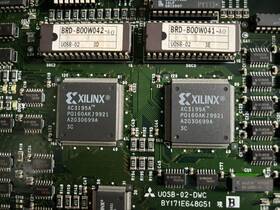
( Brand: Mitsubishi ), ( Manufacturer Part Number: U0SB-02-DWC ), ( Part Type: Board )
Review MITSUBISHI Mint Condition Contrller Board
The **Mitsubishi U0SB-02-DWC Controller Board (BY171E648G51)** is a high-performance, industrial-grade automation controller designed to deliver precise control and seamless integration within Mitsubishi Electric s advanced factory automation ecosystem. Part of the **Q Series** family, this compact yet robust board serves as the backbone for motion control applications, offering exceptional reliability and flexibility for demanding industrial environments. Engineered with Mitsubishi s proprietary **DWC (Digital Wave Controller)** technology, this board excels in high-speed, multi-axis motion control, making it an ideal choice for CNC machines, robotics, packaging systems, and automated manufacturing lines where synchronization, accuracy, and responsiveness are critical.
At its core, the **U0SB-02-DWC** integrates a **32-bit floating-point processor** with a **high-speed bus interface**, enabling real-time processing of complex motion profiles, interpolation, and closed-loop feedback control. The board supports up to **two servo axes** (expandable via additional modules) with **position, velocity, and torque control**, ensuring smooth, jitter-free motion even under heavy loads. Its **DWC architecture** leverages advanced algorithms for **trapezoidal, S-curve, and harmonic motion interpolation**, allowing for optimized acceleration/deceleration profiles that minimize mechanical stress and maximize efficiency. The controller also features **PID tuning capabilities**, enabling fine adjustments to system dynamics for superior tracking performance in both open-loop and closed-loop configurations.
Designed for ease of implementation, the **U0SB-02-DWC** connects seamlessly to Mitsubishi s **FX, Q, and L Series PLCs** via **serial communication protocols** (such as **CC-Link, Ethernet/IP, or DeviceNet**), allowing for centralized control and monitoring from a higher-level automation system. Its **digital and analog I/O options** provide flexibility for integrating sensors, limit switches, and external feedback devices, while its **high-speed pulse output (up to 1 MHz)** ensures precise synchronization with servo drives like Mitsubishi s **MR-J4, MR-J3, or MR-J2 series**. The board also supports **Mitsubishi s proprietary motion commands** (e.g., **MOTION, SERVO, and POSITION commands**) through ladder logic or structured text programming, simplifying implementation in existing automation setups.
Built to withstand the rigors of industrial environments, the **U0SB-02-DWC** is housed in a **durable metal enclosure** with **wide operating temperature ranges (-10 C to 55 C)** and **high resistance to electrical noise**, making it suitable for harsh factory floors, automated assembly lines, and continuous production environments. Its **low-power consumption** and **compact form factor** (measuring approximately **110mm x 80mm**) allow for space-efficient integration without compromising performance. Additionally, the board includes **diagnostic LEDs** for quick troubleshooting and **error logging capabilities**, reducing downtime and enhancing maintainability.
For users requiring advanced features, the **U0SB-02-DWC** supports **multi-tasking motion control**, enabling simultaneous operation of multiple axes with independent profiles ideal for applications like **pick-and-place robots, CNC milling machines, or synchronized conveyor systems**. Its **firmware is regularly updated** by Mitsubishi, ensuring compatibility with the latest motion control techniques and security patches, while its **open architecture** allows for customization through **Mitsubishi s GX Works3 software** or third-party motion libraries. Whether deployed in a small-scale automation project or as part of a large-scale industrial automation network, this controller board delivers **unmatched precision, scalability, and integration capabilities**, making it a cornerstone for modern manufacturing and automation solutions.
The Mitsubishi U0SB-02-DWC controller board (model BY171E648G51) is a specialized industrial automation device designed for use with Mitsubishi Electric s Q-series PLCs and other compatible systems. Below is a detailed breakdown of its pros and cons, followed by a conclusion and recommendation.
---
**Pros:**1. **Compatibility with Mitsubishi Q-Series PLCs**: This controller board is specifically designed to work seamlessly with Mitsubishi s Q-series programmable logic controllers (PLCs), ensuring smooth integration into existing or new automation systems. It supports communication protocols like CC-Link, Ethernet/IP, and Modbus, depending on the configuration.
2. **High Performance and Reliability**: Mitsubishi is known for producing robust industrial equipment, and this controller board is built to withstand harsh environments, including temperature fluctuations, electrical noise, and mechanical stress. It is designed for continuous operation in factory settings, reducing downtime.
3. **Enhanced Communication Capabilities**: The U0SB-02-DWC supports multiple communication interfaces, allowing it to interface with other devices such as HMIs (Human-Machine Interfaces), SCADA systems, or other PLCs. This flexibility makes it suitable for complex automation setups where multiple devices need to communicate efficiently.
4. **Easy Integration with Mitsubishi Software**: The board is compatible with Mitsubishi s programming software like GX Works 3, which simplifies the development, debugging, and maintenance of automation programs. This reduces the learning curve for engineers familiar with Mitsubishi s ecosystem.
5. **Scalability**: The controller board can be part of a larger network or system, allowing for scalability as your automation needs grow. It supports both local and remote monitoring and control, making it adaptable to various industrial applications.
6. **Support for Advanced Features**: Depending on the configuration, this board may support advanced features such as high-speed data processing, real-time monitoring, and integration with IoT platforms. This can enhance the overall efficiency and functionality of your automation system.
7. **Warranty and Support**: Mitsubishi offers comprehensive warranty coverage and technical support for their products. This ensures that if issues arise, you can rely on manufacturer-backed assistance to resolve them quickly.
---
**Cons:**1. **Cost**: Mitsubishi products, especially specialized controller boards, can be more expensive than alternatives from other manufacturers. The price may be a significant investment, particularly for small businesses or startups with limited budgets.
2. **Vendor Lock-In**: By choosing a Mitsubishi-specific controller board, you may become dependent on Mitsubishi s ecosystem. This can limit your flexibility if you decide to switch to a different PLC or automation platform in the future. Compatibility with third-party devices might require additional adapters or interfaces.
3. **Complexity for Non-Experts**: While Mitsubishi s software is user-friendly for experienced engineers, the setup and programming of this controller board can be complex for those without prior experience in PLC programming or industrial automation. Training may be required to fully utilize its capabilities.
4. **Limited Availability of Parts**: As with many specialized industrial components, finding replacement parts or support outside of Mitsubishi s official channels can be challenging. This could lead to longer downtimes if parts need to be sourced from third-party suppliers.
5. **Learning Curve for New Protocols**: If your team is not already familiar with Mitsubishi s communication protocols (e.g., CC-Link, Ethernet/IP), there may be a learning curve involved in integrating this board into your system. This could temporarily slow down implementation.
6. **Potential for Overkill**: If your automation needs are relatively simple and do not require the full range of features offered by this controller board, purchasing it may be unnecessary. A simpler or less expensive alternative might suffice, reducing costs without sacrificing functionality.
7. **Dependence on Mitsubishi s Roadmap**: Mitsubishi may discontinue or update its product line over time, which could render this controller board obsolete or incompatible with future software updates. Always ensure that the product aligns with your long-term plans.
---
**Conclusion:**The Mitsubishi U0SB-02-DWC controller board (BY171E648G51) is a high-quality, reliable, and feature-rich device that excels in environments where compatibility with Mitsubishi s Q-series PLCs is critical. Its robust performance, advanced communication capabilities, and integration with Mitsubishi s software make it an excellent choice for industrial automation projects that require seamless operation and scalability. However, its higher cost, potential vendor lock-in, and complexity for non-experts may pose challenges, particularly for smaller operations or those with limited technical resources.
---
**Recommendation:** Purchase the Mitsubishi U0SB-02-DWC controller board if:- You are already using or planning to use Mitsubishi Q-series PLCs in your automation system.
- Your project requires robust, high-performance communication between PLCs, HMIs, or other industrial devices.
- You prioritize reliability, warranty support, and long-term compatibility with Mitsubishi s ecosystem.
- Your team has the expertise (or is willing to invest in training) to program and maintain the system effectively.
Avoid purchasing this controller board if:- You are working with a tight budget and can find equally capable alternatives from other manufacturers at a lower cost.
- Your automation needs are simple and do not justify the investment in a high-end controller board.
- You anticipate future flexibility to switch to non-Mitsubishi PLCs or automation platforms, as this could limit your options.
- Your team lacks experience with Mitsubishi s programming software or industrial communication protocols.
For smaller projects or those with limited resources, consider evaluating other options such as generic industrial communication modules, open-source PLCs, or controllers from competitors like Siemens, Allen-Bradley, or Omron. Always conduct a thorough cost-benefit analysis to ensure the board aligns with your project s requirements and long-term goals.
Details:
part #: u0sb02 prices
- $990.00-$1699.00
specifications valvesplumbing:
- brand: Mitsubishi
- mpn: U0sb-02-dwc
- part type: Board
shipping valvesplumbing:
- cost: $55.00
- type: Fixed
- service: USPS Ground Advantage
- class: Standard
- carrier: USPS
- transit: 3-9 Days
payments valvesplumbing:
- credit card: Visa
- other
- wallet: Paypal
returns valvesplumbing:
- policy: Returns Accepted
- time: 30 Days
- method: Money back
- paid by: Buyer
offer valvesplumbing:
- options: Ship-to-home
- availability: In Stock
- sold: 0
- started: June 2, 2026
- best offers: True
- quantity: 1
seller valvesplumbing:
- rating: 100.0%
- city: Niagara Falls, New York
- # reviews: 1399
general valvesplumbing:
- Hydraulics, Pneumatics, Pumps Plumbing > Valves Manifolds > Other Valves Manifolds
- condition: Used
Mitsubishi U0SB-02 Is Similar To:
- Mitsubishi Mr-s3-33aa-e01 Mint Condition Servo Drive (57.6% similar) Alterations or removal of any components a part voids the 30-DAY return privilege...(April 27th, 2024)
- Mitsubishi Fcua-mp10-03 Mint Condition (55.8% similar) Alterations or removal of any components a part voids the 30-DAY return privilege...(September 5th, 2024)
- Mitsubishi Gt2710-vtwa Gt2710-vtwa Mint Condition 2019 Got2000 (48.4% similar) Part #: Mitsubishi GT2710-VTWA GT2710-VTWA for sale...(November 3rd, 2024)
- Mitsubishi Hc-kfs13bl-s18 Mint Condition Servo For Robot (52.5% similar) Part #: Mitsubishi HC-KFS13BL-S18 for sale...(December 11th, 2024)
- Mitsubishi Fr-e840-7.5kepa-60 Mint Condition (52.7% similar) Alterations or removal of any components a part voids the 30-DAY return privilege...(December 29th, 2024)
- Mitsubishi Mds-dj-sp-100 Mint Condition Spindle Drive (60.5% similar) Alterations or removal of any components a part voids the 30-DAY return privilege...(December 29th, 2024)
- Mitsubishi Rv-7fl-q-sh02 Mint Condition Robot (57.7% similar) Alterations or removal of any components a part voids the 30-DAY return privilege...(January 16th, 2025)
- Mitsubishi Gt1155hs-qsbdtl1 Mint Condition Got 5.7-inch (56.2% similar) Alterations or removal of any components a part voids the 30-DAY return privilege...(February 16th, 2025)
- Mitsubishi Fx84a-5 Fx84a5 Bn624a353h02 Mazak Meldas Board (38.4% similar) Mitsubishi circuit board FX84A-5 BN624A353H02...(March 29th, 2025)
- Mitsubishi Mr-sa352m Mint Condition Ac Servo Melservo-sa (55.7% similar) Alterations or removal of any components a part voids the 30-DAY return privilege...(April 15th, 2025)
- Mitsubishi F943got-lwd Mint Condition Controller (66.7% similar) Alterations or removal of any components a part voids the 30-DAY return privilege...(September 29th, 2025)
