SMC VR2110-N01 Delay Valve Npt Orifice 1/8
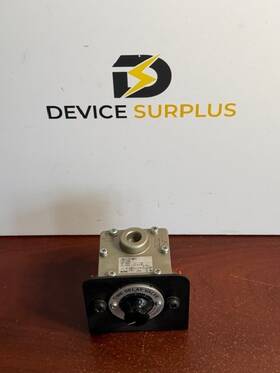
( Brand: Smc ), ( Manufacturer Part Number: VR2110-N01 ), ( Part Type: Valve ), ( Suitable Media: Air ), ( Unit Type: Unit )
Review SMC Time Delay Valve 1/8 Inch Npt Adjustable Orifice
The **SMC VR2110-N01 Delay Valve with 1/8" NPT Orifice** is a precision-engineered pneumatic component designed to introduce a controlled time delay in air flow within automated systems, ensuring smooth, synchronized, and efficient operation. Part of SMC s high-performance VR series, this normally closed delay valve operates on a simple yet effective principle: when activated, it allows compressed air to pass through only after a predetermined delay period, which is determined by the internal orifice size and the pressure settings. The **1/8" NPT orifice** plays a critical role in regulating the flow rate, enabling fine-tuned adjustments to the delay duration by modifying the air leakage through the valve s pilot mechanism. This feature makes it ideal for applications where gradual actuation such as in clamping, positioning, or sequencing systems is essential to prevent sudden jerks, mechanical stress, or operational inconsistencies.
Constructed with robust materials, the VR2110-N01 is built to withstand the demands of industrial environments, featuring a durable aluminum or plastic body (depending on the variant) and corrosion-resistant seals that ensure long-term reliability. Its compact yet sturdy design allows for easy integration into existing pneumatic circuits, with standard **1/8" NPT threaded connections** that simplify installation and maintenance. The valve operates on a **normally closed (NC) principle**, meaning it remains sealed until activated by an external pilot signal, which can be electrical (via a solenoid) or pneumatic (via another control signal). This flexibility makes it adaptable to a wide range of control systems, from simple mechanical setups to complex PLC-driven automation.
One of the standout features of the VR2110-N01 is its **adjustable delay time**, which can be fine-tuned by modifying the orifice size or the pilot pressure. This allows operators to customize the valve s response time to match specific application requirements, whether it s a brief pause in a packaging line or a gradual extension in a robotic arm s movement. The valve s internal structure includes a **spring-loaded mechanism** that maintains consistent performance over repeated cycles, reducing wear and tear while ensuring predictable operation. Additionally, its **low power consumption** and minimal maintenance requirements make it a cost-effective solution for both new installations and retrofits in manufacturing, assembly, and material handling systems.
Safety and efficiency are paramount in pneumatic applications, and the VR2110-N01 delivers on both fronts. Its **fail-safe design** ensures that in the event of a power failure or signal loss, the valve will return to its normally closed state, preventing unintended actuation and potential damage. The valve s **quiet operation** and smooth airflow further contribute to a more controlled and ergonomic working environment. Whether used in conjunction with cylinders, grippers, or other pneumatic actuators, this delay valve enhances system performance by introducing controlled timing, reducing energy waste, and improving overall process stability. Ideal for industries such as automotive assembly, food and beverage processing, and robotics, the SMC VR2110-N01 is a versatile and reliable component for engineers seeking precision and efficiency in their pneumatic control solutions.
### **Pros and Cons of buying a SMC VR2110-N01 Delay Valve (1/8" NPT Orifice)**
#### **Pros:**1. **Precision Timing Control** The VR2110-N01 is a pilot-operated delay valve designed for applications requiring accurate timing of pneumatic or hydraulic signals. It allows for controlled delay in air or fluid flow, which is useful in automated processes where sequential activation is critical.
2. **Compact and Modular Design** SMC valves are known for their compact size and ease of integration into existing pneumatic systems. The 1/8" NPT orifice size makes it suitable for smaller-scale applications where space is limited.
3. **Reliable Performance** SMC is a well-established brand with a reputation for durability and consistent operation. The valve is built to handle repeated cycling without significant wear, making it suitable for industrial or high-frequency applications.
4. **Easy Installation and Maintenance** The valve features standard NPT threading, which simplifies installation in systems already equipped with similar fittings. It also has minimal internal components, reducing the likelihood of clogging or failure over time.
5. **Adjustable Delay Settings** The VR2110-N01 allows for manual or automated adjustment of delay time, providing flexibility in process control without requiring complex modifications to the system.
6. **Compatibility with SMC Systems** If you already use SMC components, this valve will integrate seamlessly with other SMC actuators, regulators, and controllers, reducing compatibility issues.
7. **Cost-Effective for Specific Applications** While not the cheapest valve on the market, its precision and reliability can justify the cost in applications where timing accuracy is non-negotiable.
---
#### **Cons:**1. **Limited Orifice Size** The 1/8" NPT orifice may restrict flow rates in high-demand applications. If your system requires larger volumes of air or fluid, this valve could become a bottleneck, necessitating additional components like pressure regulators or larger lines.
2. **Potential for Leakage Over Time** Like all pneumatic valves, the VR2110-N01 can develop minor leaks at seals or fittings, especially if not properly maintained. This could lead to inefficiencies or require periodic servicing.
3. **Dependence on Pilot Signal** Since it is pilot-operated, the valve relies on an external control signal to function. If the pilot system fails, the valve will not operate, potentially disrupting the entire process.
4. **Higher Initial Cost Compared to Basic Valves** For simple delay applications, a basic mechanical timer or a simpler solenoid valve might suffice at a lower cost. The VR2110-N01 is optimized for precision, which may not be necessary in all use cases.
5. **Requires Proper Calibration** Achieving the desired delay time may require fine-tuning, which could be time-consuming for operators unfamiliar with pneumatic systems. Incorrect calibration can lead to inconsistent performance.
6. **Limited Customization** While adjustable, the delay range of the VR2110-N01 may not cover extremely short or long delays without additional modifications or external components.
7. **Potential for Contamination Issues** If the air supply is not properly filtered, debris could enter the valve, affecting its operation. This requires additional maintenance, such as regular filter checks.
---
### **Conclusion**
The **SMC VR2110-N01 Delay Valve (1/8" NPT Orifice)** is a high-quality, precision tool ideal for applications where controlled timing of pneumatic or hydraulic signals is essential. Its strengths lie in its reliability, ease of integration with SMC systems, and adjustable delay settings, making it a strong choice for industrial automation, robotics, or any process requiring sequential activation.
However, its limitations such as the small orifice size, potential for leakage, and dependency on a pilot signal may make it less suitable for high-flow applications or scenarios where cost is the primary concern. Additionally, users must ensure proper calibration and maintenance to avoid performance issues.
### **Recommendation**
**Buy the SMC VR2110-N01 if:**- You need precise, adjustable delay control in a pneumatic system.
- You are already using SMC components, ensuring compatibility.
- Your application involves moderate flow rates (1/8" NPT is sufficient).
- You can invest in proper filtration and maintenance to prevent contamination or leakage.
**Consider alternatives if:**- Your system requires high flow rates, as the 1/8" orifice may limit performance.
- You need extremely short or long delay times beyond the valve s range.
- Cost is a major factor, and a simpler or cheaper delay mechanism (e.g., a mechanical timer or basic solenoid valve) would suffice.
- You lack experience with pneumatic systems, as calibration and troubleshooting may be challenging.
For most precision pneumatic applications where timing is critical, the **VR2110-N01 is a reliable and effective choice**, provided the system requirements align with its specifications.
Details:
part #: vr2110n01 prices
- $39.00-$146.00
specifications valvesplumbing:
- brand: Smc
- mpn: Vr2110-n01
- part type: Valve
- suitable media: Air
- unit type: Unit
payments valvesplumbing:
- other
- credit card: Mastercard
- wallet: Google-pay
shipping valvesplumbing:
- transit: 3-6 Days
- cost: $10.00
- carrier: UPS
- type: Fixed
- service: UPS Ground
- class: Standard
seller valvesplumbing:
- city: Menasha, Wisconsin
- rating: 100.0%
- # reviews: 2638
general valvesplumbing:
- condition: Used
- Hydraulics, Pneumatics, Pumps Plumbing > Valves Manifolds > Other Valves Manifolds
returns valvesplumbing:
- time: 30 Days
- method: Money back
- paid by: Buyer
- policy: Returns Accepted
offer valvesplumbing:
- sold: 0
- started: March 13, 2026
- best offers: True
- availability: In Stock
- quantity: 1
- options: Ship-to-home
Smc VR2110-N01 Is Similar To:
- 10-vq1201ny-5 10-vq1101-5 Smc Valve Manifold With And (29.3% similar) Comes from clean room environment, was fully functional when removed the service. Comes in non-original plastic sealed packaging. Please e-mail with any questions. Smc 12 pieces valve manifold complete with VQ1201NY-5 and VQ1101-5 note: comes as pictured...(March 30th, 2018)
- 3199-bn Smc 150-bn Steammist Steamist Smc-150-bn Time-temperature Control (30.9% similar) The TC-150 comes complete with 25 ft. Its also designed to easily replace previous steam head designs without plumbing modifications. 75COLORPOLISHED method wall mounted steamiest SMC-150-PC time temperature control, brushed nickel retail price inch mounts inside the steam room only start stop and...(March 1st, 2017)
- 3990290 Smc Fnpt Series Pvc Ball Valve With Viton Tm Seals (33.1% similar) Valve is npt x 1/4 series 226 PVC ball with Vito seals the two-way design promotes multiple configurations to fit exact end use application diameter through hole in. PVC Vito seal good chemical resistance flag handle...(December 2nd, 2018)
- 3d80-002106-v1 Smc High Vacuum Valve (26.3% similar) Has some cosmetic wear. All statements regarding products and their configurations are made to the best of our ability with assumption that buyer is knowledgeable proficient in use this type equipment. As you know with most government agencies, when a new grant comes in, they have to justify the by ...(August 9th, 2017)
- 6381690 Smc Ball Valve 1 (29.9% similar) Ball valve, 1 PC, 3/8 in, PVC, hose barb product features Smc inline valve PVC id x in shut off valves irrigation. Smc inline ball valve PVC id barb x 3/8 barb: material of construction: gray long lever handle buns-n o-ring max pressure: 125 psi temperature 140 f through hole diameter...(August 3rd, 2017)
- 6390690 Smc Fnpt Polypropylene Ball Valve With Seals Blue Handle (36.2% similar) Panel mount screws not supplied. 375 diameter through hole in ball maximum panel thickness. Two of the four available screw boss locations will secure valve. Polypropylene with ball buns-n seals panel mount hole size. The handle can be orientated in four positions and installed or removed while ...(April 15th, 2018)
- An400 Smc Pneumatic Muffler Silencer Npt (33% similar) Marketing, listing apps, application. This item is used. Smc AN400 pneumatic muffler silencer 1/2 npt PRJ19 manufacturer: Smc model: type: used, in working condition...(October 26th, 2018)
- Arb210-00-a Smc Regulator Valve With (30.3% similar) S618-16IT only comes with what is shown in the pictures. It is also marked, set pressure...(June 25th, 2017)
- Arb250-00-a Smc Vq7-6-fg-s-3nsc Solenoid Valve (27.5% similar) Over 100,000,000 served. Please enter the shipping dimensions and weight listed above. Smc VQ7-6-FG-S-3NSC solenoid valve with ARB250-00-A regulator, used exiling. 83MPA used excellent condition actual item pictured comes as pictured see pictures for details shipping info:flat rate: 12. Check us out...(December 24th, 2017)
- As2000 Smc Pneumatic Inline Needle Valve (31.1% similar) New old stock from bulk package no box just valve...(March 25th, 2018)
- As2201f-01-06sa Smc Speed Control Valve Elbow (27.8% similar) Speed control valve, valve elbow, port size 1/8 in. Range 23 degrees to 140 f, air cylinder speed control. 0MM, valve body size 1/8 in. 5 to 145 psi, temp. Valve tube size valve flow out, body material - valves nickel-plated brass, connection besot x tube, adjustment knob, pressure range 14...(August 1st, 2018)
